💡 Key Takeaways
- Cozy cardio is easy, enjoyable low-intensity movement such as a walk with a show or podcast, and it helps mainly because you are more likely to keep doing it.
- Aim for a pace where you can talk in full sentences; the WHO guideline for adults is 150 to 300 minutes of moderate activity a week, and brisk easy sessions count toward it; a very slow stroll is light activity, which still beats sitting.
- It will not replace strength training or hard intervals if you want muscle or peak fitness, so treat it as the base of a week, not the whole plan.
- Weight change still depends on total food and activity, so do not assume a slow walk licenses extra snacks.
1. What is cozy cardio, and does it actually improve consistency?
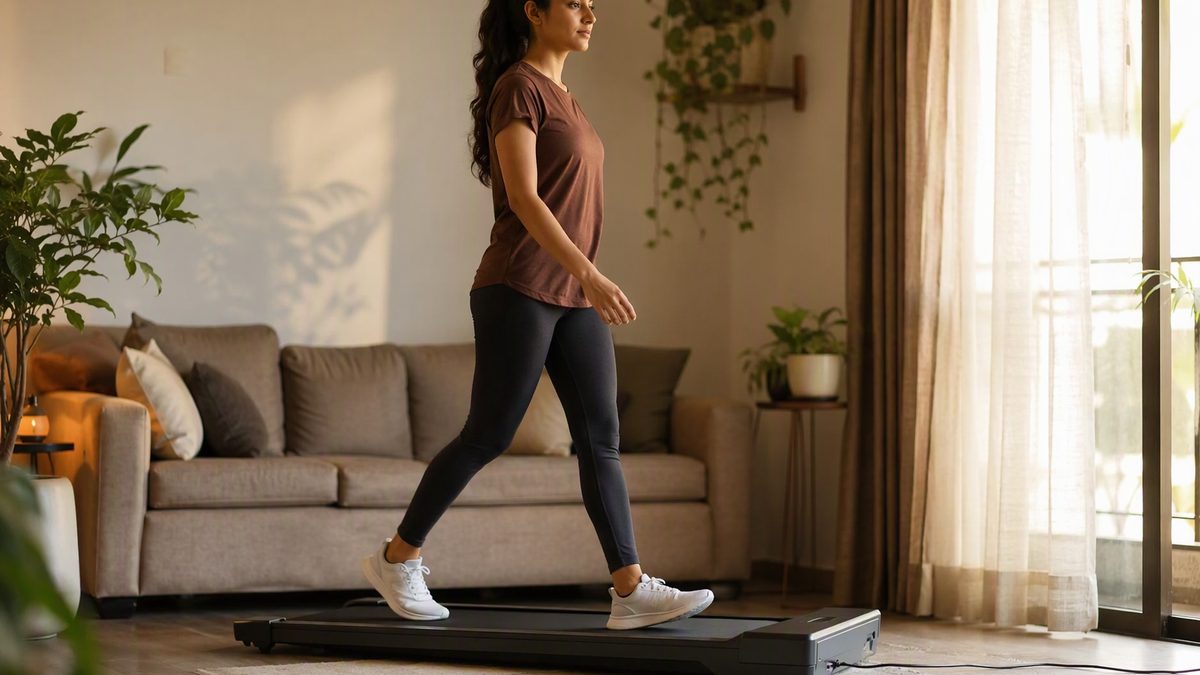
Cozy cardio is low-intensity cardio made deliberately pleasant: a slow walk or a walking-pad session with a favourite show, a podcast, soft lighting and comfortable clothes. It improves consistency mostly by removing the dread that makes people skip workouts, not by being a better workout in itself.
The idea behind this is well supported even though the trend is new. A systematic review of exercise and self-determination theory (Teixeira and colleagues, 2012) found that people who exercise for reasons they themselves value, such as enjoyment, tend to keep going longer than those who exercise out of guilt or pressure. The review covered 66 studies, mostly observational and intervention work, so it shows a pattern rather than proving that any one habit works. Still, it matches what most coaches see: the best programme is the one you will actually do next Tuesday.
The format is flexible. Some people do it on a walking pad at home, some in a park, some on the gym treadmill with earphones in. What matters is that the effort is low enough that you finish the session wanting to repeat it.
A useful way to judge whether a session is cozy enough is how you feel the next day. If you wake up looking forward to the next walk, the intensity was right. If you dread it, shorten the session, slow down or change the setting, because dread is exactly what this approach is trying to remove. Over weeks, that single habit of showing up often does more for fitness than an occasional heroic workout followed by days of soreness and avoidance.
2. How hard should cozy cardio feel?
Use the talk test. At the right pace you can speak in full sentences without gasping, your breathing is slightly deeper than normal, and you could keep going for another 20 minutes. For many people that is a brisk walk; for a fit runner it may be a very easy jog. If you cannot hold a conversation, you have drifted out of cozy territory.
Heart rate is a rough guide. Easy sessions generally sit in the lower zones, often described as zone 1 to 2, and our guides to cardio heart rate zones and zone 2 cardio for beginners explain how to find yours. Heat changes the numbers: in Indian summer or monsoon humidity your heart rate will run higher at the same pace, so go by the talk test and slow down rather than chasing a figure on your watch.
Duration matters more than speed here. Most people settle on 30 to 60 minutes, which is long enough to feel like a proper session and short enough to fit alongside work and family.
3. What are the real benefits of low-intensity movement?
The strongest evidence is for regular moderate activity in general. The WHO 2020 guidelines on physical activity (Bull and colleagues) recommend that adults do at least 150 to 300 minutes of moderate-intensity activity a week, or 75 to 150 minutes of vigorous activity, plus muscle-strengthening on two or more days. They also state that doing some activity is better than none. Brisk walking at a conversational pace falls into the moderate category for many people, especially those who are not yet fit. A very slow stroll is light activity rather than moderate, so it does not count toward the 150 minutes, but it still beats sitting and is a fine place to start.
In practical terms, a cozy session can give you:
- More weekly movement. An extra 30 to 45 minutes of walking on four or five days adds up to well over two hours a week without needing recovery time.
- A lower barrier to starting. People coming back after illness, injury, a long break, or a stressful stretch can restart at this level.
- A way to break up sitting. Desk workers may get more from regular easy movement than from one hard session surrounded by ten hours in a chair.
- Time outdoors or in daylight. If you walk early morning or after sunset, you also get a break from screens and, often, better sleep habits.
Be wary of larger claims. Social media posts attribute fat loss, hormone balance and stress relief to cozy cardio specifically. Walking does lower stress for many people, but the trend itself has not been tested in trials, so treat these claims as plausible rather than proven.
4. Will cozy cardio help you lose weight?
It can help, but only through the same arithmetic as any other exercise. A slow walk burns a modest number of calories, roughly a few per minute depending on your body weight and speed, so 45 minutes might use a couple of hundred. That is useful over weeks and months, and it is easy to repeat without feeling wrecked afterwards, which is a real advantage over hard intervals when you are also eating less.
The catch is that appetite and daily movement can shift to compensate. Some people eat a little more after exercise, or sit more for the rest of the day, and these responses vary a lot from person to person. If your scale is not moving after a few weeks, check your food intake before blaming the walk. Our guide to walking for weight loss in India covers step targets and food matching in more detail, and incline walking shows how to raise the effort when you want more from the same time.
For fat loss, the biggest levers are still a moderate calorie deficit, enough protein, strength training and sleep. Cozy cardio is a good way to add activity around them. It is not a stand-alone solution.
One more tip is to track the habit, not the performance. Marking a calendar or logging the session in the UltraFit360 app shows you a run of completed days, and that streak is usually more motivating than pace or calorie numbers on easy sessions.
5. How to build a cozy cardio habit that sticks
Make it easy to start and hard to skip. Pick a fixed slot, such as right after dinner or straight after the morning chai, and attach the session to something you already do. Keep shoes and earphones where you can see them, and save one show or podcast for walking time only. That small reward is what makes the habit feel cozy rather than dutiful.
- Start with 20 to 30 minutes. Three to four days a week is enough for the first month.
- Set a minimum. A bad day still gets 10 minutes. Showing up matters more than the length.
- Plan for weather. Have a hot-season and a monsoon option: an early walk, a covered corridor, a mall, or a walking pad indoors. Our walking pad versus treadmill comparison helps if you are deciding on a home setup.
- Add to it slowly. After a month, extend one session or add a day. Do not raise both at once.
If you want a structured target, the 6-6-6 walking challenge and the Japanese interval walking guide offer two different formats you can borrow from.
6. When cozy cardio is not enough
Easy cardio does not build much muscle or bone strength, and it does not train your top-end fitness. If your goal is to get stronger, add two resistance sessions a week; our strength training fundamentals guide is a good starting point. If you want to run faster or improve your VO2 max, you will eventually need some harder work too, which the HIIT versus LISS comparison explains.
Also pay attention to symptoms. Chest pain, unusual breathlessness, dizziness or fainting during gentle exercise should be checked by a doctor before you continue. The same applies if you have heart disease, uncontrolled blood pressure or diabetes and are starting from no activity. For most healthy adults, though, cozy cardio is a safe and low-risk way to move more.
Related reading
7. Frequently Asked Questions
Q1: How long should a cozy cardio session be?
A1: Most people do 30 to 60 minutes at a conversational pace. If you are just starting, 20 minutes three or four times a week is enough, and a 10 minute minimum on bad days keeps the habit alive.
Q2: Is cozy cardio the same as zone 2 training?
A2: They overlap but are not identical. Zone 2 is a specific heart rate range used for aerobic base training, while cozy cardio is any easy, enjoyable movement. A conversational walk often lands in zone 2 for beginners, but cozy cardio does not need heart rate tracking.
Q3: Can cozy cardio replace the gym?
A3: Not entirely. It adds activity and builds a habit, but it does little for muscle and bone strength. Add two strength sessions a week if you want to build or keep muscle.
Q4: Does cozy cardio burn fat?
A4: It burns calories like any other activity, in modest amounts per session. Fat loss still depends on your overall energy balance, so combine it with sensible eating, protein and strength training.
Scientific References & Clinical Sources
- Teixeira PJ, et al. Exercise, physical activity, and self-determination theory: a systematic review. Int J Behav Nutr Phys Act, 2012. PMID: 22726453
- Bull FC, et al. World Health Organization 2020 guidelines on physical activity and sedentary behaviour. Br J Sports Med, 2020. PMID: 33239350
Want a plan built around your training history? UltraFit360's free AI workout planner creates and adjusts programs for you.