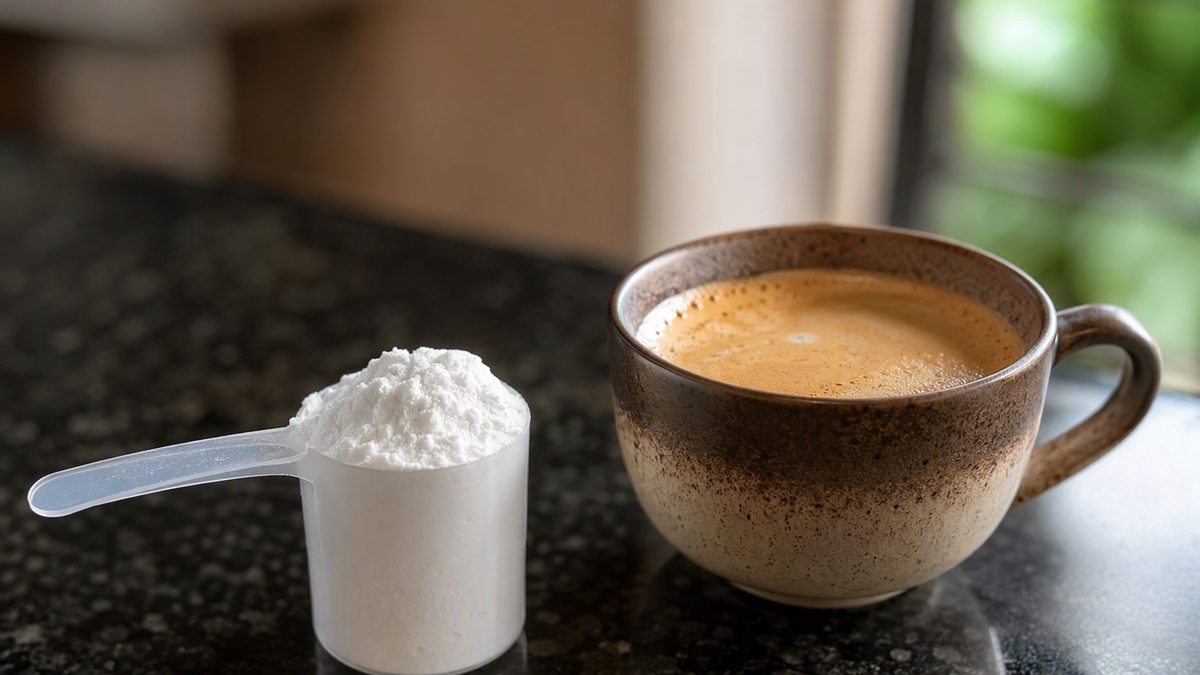
💡 Key Takeaways
- Caffeine probably does not cancel creatine for most people: one small 1996 study found it blunted the benefit of heavy loading, but the research since is scarce and has not settled the question.
- The old finding used very high doses (about 0.5 g of creatine per kg of body weight a day, roughly 35 g for a 70 kg person, plus 5 mg/kg of caffeine), well above what a maintenance routine involves.
- A simple hedge costs nothing: take creatine with a meal and keep caffeine to a pre-workout cup of tea or coffee.
- Both can upset the stomach, so if you get cramps or loose stools, space them apart or lower the dose of either.
1. Do creatine and caffeine cancel each other out?
For most people, no. The worry comes from a single small study in 1996 that found caffeine appeared to cancel the performance benefit of creatine loading. Research since then is scarce and has not shown a clear, repeatable clash, and a published review judged an effect on absorption unlikely, so moderate coffee or tea is generally treated as compatible with daily creatine.
It is still a reasonable question, because both are among the most popular supplements for training and many people take them in the same pre-workout scoop. The honest summary is that the evidence is mixed, the original effect appeared only under heavy dosing, and a cheap precaution exists if you want to be careful. The sections below explain what that first study did, what the later work found, and what to do with your morning chai or black coffee.
2. What the original study actually found
Vandenberghe and colleagues (1996) studied a small group of healthy volunteers over several six-day periods. Creatine was given as a loading dose of about 0.5 g per kg of body weight per day, which for a 70 kg person is roughly 35 g, and caffeine was taken at 5 mg per kg per day. Both creatine alone and creatine with caffeine raised muscle phosphocreatine by about 4 to 6 percent. But creatine alone increased torque during repeated maximal knee extensions by 10 to 23 percent, and with caffeine added that gain was gone. With only nine men, no replication in the same design, and a single exercise test, it is a signal rather than proof.
The authors suggested caffeine might oppose creatine's effect on how quickly muscle relaxes between contractions. A later study by Hespel and colleagues (2002) tested this in 10 men: four days of creatine shortened muscle relaxation time by about 5 percent, three days of caffeine lengthened it by about 10 percent, and the combination left it unchanged. So opposing effects on relaxation time have been shown in humans, but that study did not show that they explain the lost performance gain.
It matters how much weight to put on this. The study was small, tested one type of muscle contraction in a lab, used a loading dose much larger than the 3 to 5 g a day most people take, and the caffeine dose was given on top of the creatine for days. It showed that an interaction is possible. It did not show that a cup of coffee in the morning wipes out your supplement.
It also helps to remember what each supplement is doing. Creatine acts slowly by raising muscle stores over days to weeks, so it does not need to be timed against your coffee, and one cup on one morning cannot undo weeks of stored creatine. Caffeine acts within an hour and wears off in several hours. Because their timescales differ so much, the only place a clash could plausibly happen is the performance window right after a big dose of both, which is why the practical advice focuses on spacing and not on avoiding either one.
3. What later research says
Trexler and Smith-Ryan reviewed the topic in 2015 under the title "Creatine and Caffeine: Considerations for Concurrent Supplementation." They noted that research directly testing the combination is scarce, that a pharmacokinetic interaction (caffeine stopping creatine from being absorbed) is unlikely, and that proposed explanations for the blunting are opposing effects on muscle relaxation time or stomach upset from taking both at once. None has been confirmed as the cause of the lost performance gain.
Two practical points follow. First, the evidence base is thin. Second, both substances can cause gastrointestinal complaints in some people, so combining a large dose of each increases the chance of an upset stomach, which is a separate issue from muscle performance.
The fair conclusion is that caffeine plus creatine is probably fine for most people, but because the question is not settled, it is reasonable to avoid stacking the highest doses of both in the same hour.
4. How much caffeine are you really taking?
Research on caffeine and training typically uses 3 to 6 mg per kg of body weight about an hour before exercise, which is 200 to 400 mg for a 65 kg person. Everyday sources are well below that. A typical cup of filter coffee has roughly 80 to 100 mg, an espresso about 60 to 80 mg, and a cup of milk chai around 30 to 50 mg depending on strength. A pre-workout scoop often lists 150 to 300 mg and sometimes more.
This means a morning chai plus a daily 5 g scoop of creatine is nowhere near the conditions of the original study. If you are using a strong pre-workout containing 300 mg or more together with a high creatine dose, you are closer to the range where caution is more reasonable, mostly because of the stomach and heart-rate effects of caffeine. For personal timing of caffeine, see our guide on caffeine timing for training performance.
If you cannot tell how much caffeine you take in a day, add it up for a week: coffee, tea, cola, energy drinks and any pre-workout. Many people are surprised to find they are above 400 mg on training days. That is the upper limit most health authorities suggest for healthy adults, and it is a more useful number to watch than any creatine interaction.
5. A simple way to take both
You do not need two separate rituals, but a small amount of spacing is an easy hedge.
- Creatine with a meal. Take your 3 to 5 g with breakfast, lunch or dinner. Food slows absorption slightly and lowers the chance of stomach upset, and the time of day makes little difference to results. See creatine timing before or after a workout.
- Caffeine before training. Have your coffee or pre-workout 30 to 60 minutes before the session, on its own schedule.
- Skip the heaviest overlap. Avoid combining a 20 g creatine loading day with a large caffeine dose and an empty stomach.
- Stay hydrated. Creatine pulls water into muscle and caffeine has a mild diuretic effect at higher intakes, so drink water through the day.
If you are loading, the loading phase guide shows how to split the dose into four smaller servings, which is gentler on the gut and keeps each serving away from your coffee.
6. Who should be more careful with caffeine and creatine?
If you notice that caffeine makes you jittery, anxious, or gives you palpitations, cutting the caffeine is a better decision than anything involving creatine. Creatine has a strong safety record in healthy adults, while caffeine tolerance varies widely between individuals and is affected by sleep, medication and health conditions. Late-day caffeine can wreck sleep, and poor sleep costs more training progress than any supplement interaction.
People with heart rhythm problems, high blood pressure, anxiety disorders, kidney disease, or who are pregnant should check caffeine and creatine intake with a doctor. Anyone taking medicines should confirm that neither supplement interferes with them.
If your concern is mixing creatine with other everyday habits, our post on creatine and alcohol covers a different interaction that has a clearer effect on recovery.
Related reading
7. Frequently Asked Questions
Q1: Can I mix creatine into my coffee?
A1: Yes. Warm drinks are fine: creatine dissolves in them and breaks down only slowly in liquid, so drink it soon after mixing. There is no need to avoid tea or coffee. If you want to follow the cautious approach from the older study, take creatine with a meal at a different time from your pre-workout caffeine.
Q2: Does caffeine reduce creatine absorption?
A2: There is no evidence that caffeine stops creatine from being absorbed into muscle. In the 1996 study, muscle phosphocreatine still rose with caffeine; what disappeared was the performance gain, and the cause was never established.
Q3: Is it safe to take creatine with a pre-workout supplement?
A3: For healthy adults it is generally fine, and many pre-workouts already contain creatine. Check the total caffeine on the label, and if you feel nauseous or get loose stools, lower either dose or take them at separate times.
Q4: Does caffeine make creatine bloating worse?
A4: Not directly. Creatine bloating comes mostly from water drawn into muscle, while caffeine can irritate the stomach in sensitive people. If you feel gassy, see our guide to preventing creatine bloating and try spacing the two out.
Scientific References & Clinical Sources
- Vandenberghe K, et al. Caffeine counteracts the ergogenic action of muscle creatine loading. J Appl Physiol, 1996. PMID: 8929583
- Trexler ET, Smith-Ryan AE. Creatine and caffeine: considerations for concurrent supplementation. Int J Sport Nutr Exerc Metab, 2015. PMID: 26219105
- Kreider RB, et al. International Society of Sports Nutrition position stand: safety and efficacy of creatine supplementation in exercise, sport, and medicine. J Int Soc Sports Nutr, 2017. PMID: 28615996
- Hespel P, Op't Eijnde B, Van Leemputte M. Opposite actions of caffeine and creatine on muscle relaxation time in humans. J Appl Physiol, 2002. PMID: 11796658
Set your targets with the free calorie and macro calculator, then build a day of meals with the meal plan generator.