💡 Key Takeaways
- Foam rolling gives a small, short-lived increase in range of motion and a modest reduction in perceived soreness; it does not need to "break up" fascia to do this.
- A 2019 meta-analysis of 21 studies found rolling before exercise had little effect on jumping or strength, while rolling afterwards slightly eased soreness and lessened performance drops.
- Range of motion also rose in the leg that was not rolled in one trial, which points to a sensory effect (higher stretch tolerance) rather than tissue change.
- Roll for 30 to 90 seconds per muscle at a firm but tolerable pressure; avoid rolling over injuries, bruises, or areas with unexplained calf pain or swelling.
1. Does foam rolling really release fascia?
Probably not in the way the name "myofascial release" suggests. The popular idea is that a roller breaks up knots or adhesions in the fascia, the connective tissue around muscles. There is little evidence that a person's body weight on a foam roller can physically change that tissue in a lasting way. What trials do show is a small, temporary gain in flexibility and a small drop in soreness, and that appears to be at least partly a sensory effect, with people tolerating more stretch, rather than a change in the tissue.
A 2021 experiment by Nakamura and colleagues illustrates this. Fifteen healthy people rolled one calf for three 60 second bouts. Ankle range of motion rose about 20 percent in the rolled leg, but also about 14 percent in the leg that was not rolled. Muscle stiffness measured by ultrasound did not change, and neither did spinal excitability (a measure of nerve signalling to the muscle). The effect instead tracked the amount of stretch the person could tolerate. The researchers concluded that the range of motion changes were most likely due to sensory changes, such as a higher tolerance to stretch, and not changes to the tissue itself. The sample was small and it was one muscle, so it is one piece of evidence rather than the final word.
None of this makes foam rolling useless. It means the benefits you can expect are about feeling looser and a bit less sore, not remodelling your body.
2. What the main reviews found
Two reviews cover most of the ground. Cheatham and colleagues (2015) assessed 14 studies and concluded that rolling with a foam roller or roller massager appears to give short-term increases in joint range of motion without harming muscle performance, and may reduce soreness and performance drops after hard exercise. They noted that the evidence was still emerging.
Wiewelhove and colleagues (2019) pooled 21 studies and separated rolling before exercise from rolling afterwards. The numbers were small:
| Timing | Outcome | Average effect |
|---|---|---|
| Before exercise | Flexibility | About +4 percent |
| Before exercise | Sprint performance | About +0.7 percent |
| Before exercise | Jump and strength | Negligible |
| After exercise | Perceived muscle pain | About 6 percent less |
| After exercise | Strength and sprint decline | About 4 percent and 3 percent smaller drop |
These are modest effects, and the studies were mostly short and in young, active people. The meta-analysis also suggested foam rollers did a little better than roller massagers for restoring strength, though the difference was uncertain.
3. When to roll: before or after training?
Both can work, for different reasons. Before training, one to two minutes on the muscles you will use is a reasonable part of a warm-up, since pre-rolling slightly increased flexibility and did not reduce jump or strength output in the meta-analysis. It does not replace a proper warm-up with light sets or movement rehearsal, which does more for performance.
After training, rolling for a few minutes may take the edge off soreness over the next day or two. If you are very sore, a gentle roll is a more comfortable alternative to stretching hard, and our active recovery guide covers what else to add on easy days.
In a 2018 meta-analysis, massage did a bit better than other recovery tools for soreness, so if you have access to a physiotherapist or masseur, that is a fair option on top of or in place of rolling. A cheap roller, a cricket ball or a firm water bottle can give similar pressure at home.
4. Foam rolling versus stretching and massage
If your goal is to move better or feel less sore, the question is whether foam rolling beats the alternatives. A 2024 systematic review in the Journal of Sport and Health Science concluded that foam rolling and stretching do not provide better acute flexibility and stiffness improvements than any other warm-up intervention. In plain terms, rolling, stretching and active warm-up movements all give similar short-term results, so choose whichever you will actually do.
For soreness, the 2018 Dupuy meta-analysis favoured massage over several other recovery techniques. Foam rolling is a cheap form of self-massage but a different thing from a trained therapist working on you, so do not assume equal benefits. If your muscles are sore and you have a physiotherapist or masseur available, that may be a better use of time than a long session on the floor.
A sensible combination is a minute or two of rolling on the tight areas, followed by dynamic movements such as leg swings, bodyweight squats and band pull-aparts. That sequence uses rolling for the sensation effect, then reinforces the new range with movement so the nervous system learns it is safe to use it.
5. Why does it feel good, and why does that matter?
Many people report an immediate feeling of looseness, and that feeling is real even when tissue stiffness has not changed. Pressure on the skin and muscle stimulates sensory receptors, and the nervous system appears to respond by allowing more stretch before it signals discomfort. This is called increased stretch tolerance, and it fits the finding that the unrolled leg also improved in the Nakamura study.
That has two practical consequences. First, you do not need to roll a muscle until it hurts; a tolerable pressure produces the same sensory effect without leaving bruises. Second, the improvement fades within minutes to hours, so rolling should be timed close to the activity you want to use the extra range for, such as squatting or overhead work. For lasting flexibility change, trials that look at longer-term programs, including weeks of stretching or rolling, are the better guide, and the effects there are modest too.
The nervous system explanation also helps with expectations. If you roll a tight muscle every day and it stays tight, that is not a sign that you are doing it wrong. It is an indication that tightness may come from other factors such as posture habits, training load or sleep, which are worth addressing directly.
6. How to foam roll: time, pressure and technique
Studies vary a lot, so there is no single proven dose. A sensible, commonly used approach looks like this:
- Time: 30 to 90 seconds per muscle, one to three rounds. Longer sessions have not clearly worked better.
- Pressure: firm enough to feel uncomfortable but not sharp. If you hold your breath or tense up, ease off.
- Speed: slow passes, pausing on tender spots for a few breaths.
- Muscles: quads, hamstrings, calves, glutes, upper back and the outer thigh are the usual choices.
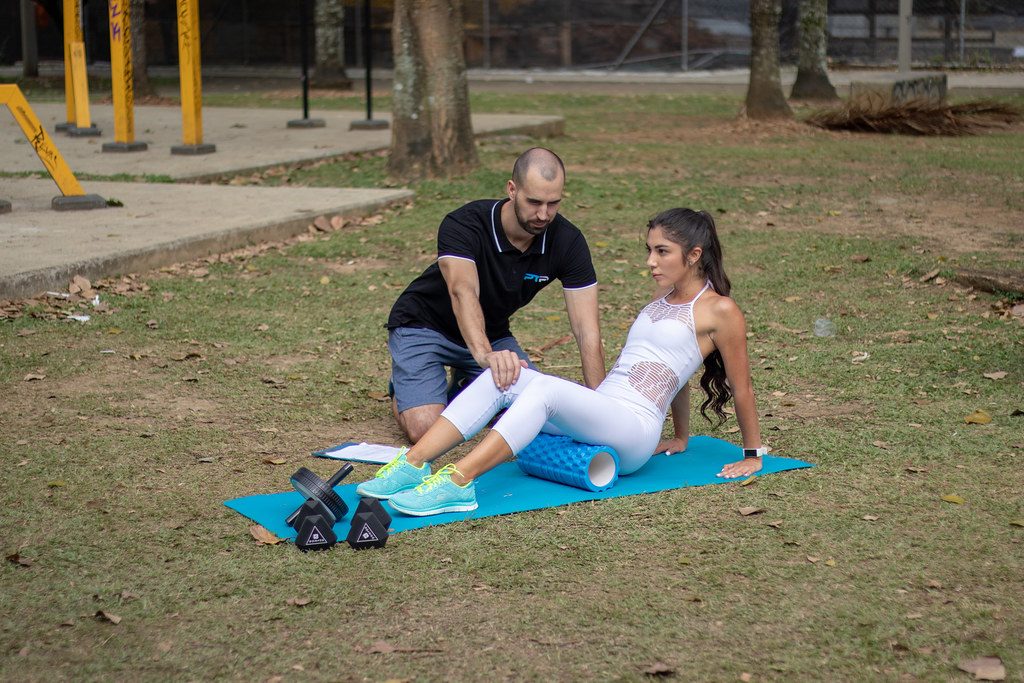
Use a softer roller if you are new, and put some body weight through your arms or the other leg to control the load. Our foam rolling guide goes through specific exercises step by step, and the mobility and flexibility guide covers what to combine it with.
Do not roll directly over your lower back, which has no ribcage to spread the load, or over joints, and avoid rolling the front of the neck.
7. Who should be careful
Skip rolling over fresh injuries, bruises, swollen areas, varicose veins or areas of numbness. Pain in one calf with swelling, warmth or redness can be a sign of a blood clot and needs prompt medical assessment, not a foam roller. Speak to a doctor first if you take blood thinners, have osteoporosis or a connective tissue condition, are pregnant, or have a history of nerve problems.
If rolling hurts in a sharp, shooting or tingling way, stop. Persistent tight spots that do not ease over a few weeks may be worth a physiotherapist visit, because the cause may be something other than the muscle itself.
Related reading
8. Frequently Asked Questions
Q1: Does foam rolling break up knots?
A1: There is little evidence that it does. Trials show short-term gains in flexibility and a small drop in soreness, and one study found range of motion also rose in the leg that was not rolled, suggesting the effect is partly sensory, with people tolerating more stretch.
Q2: How long should I foam roll each muscle?
A2: Thirty to 90 seconds per muscle, one to three rounds, is a common range. Studies differ widely and no precise dose has been established, so use what feels tolerable and repeatable.
Q3: Does foam rolling improve performance if done before a workout?
A3: Only slightly. A 2019 meta-analysis found a small improvement in flexibility and sprint performance after pre-rolling, with negligible effects on jump and strength. It should not replace a proper warm-up.
Q4: Can I foam roll every day?
A4: For most healthy people, short daily rolling is fine. Avoid bruised, swollen or injured areas, and stop if you get sharp pain or tingling. See a doctor for one-sided calf pain with swelling.
Scientific References & Clinical Sources
- Cheatham SW, et al. The effects of self-myofascial release using a foam roll or roller massager on joint range of motion, muscle recovery, and performance: a systematic review. Int J Sports Phys Ther, 2015. PMID: 26618062
- Wiewelhove T, et al. A meta-analysis of the effects of foam rolling on performance and recovery. Front Physiol, 2019. PMID: 31024339
- Nakamura M, et al. Local and non-local effects of foam rolling on passive soft tissue properties and spinal excitability. Front Physiol, 2021. PMID: 34248682
- Dupuy O, et al. An evidence-based approach for choosing post-exercise recovery techniques to reduce markers of muscle damage, soreness, fatigue, and inflammation: a systematic review with meta-analysis. Front Physiol, 2018. PMID: 29755363
- Warneke K, et al. Foam rolling and stretching do not provide superior acute flexibility and stiffness improvements compared to any other warm-up intervention: A systematic review with meta-analysis. J Sport Health Sci, 2024. PMID: 38244921
UltraFit360 is a free AI fitness coach with weekly coaching reports, workout programs and photo meal logging. See all features.